
Seminar on Post-War Structural Rehabilitation
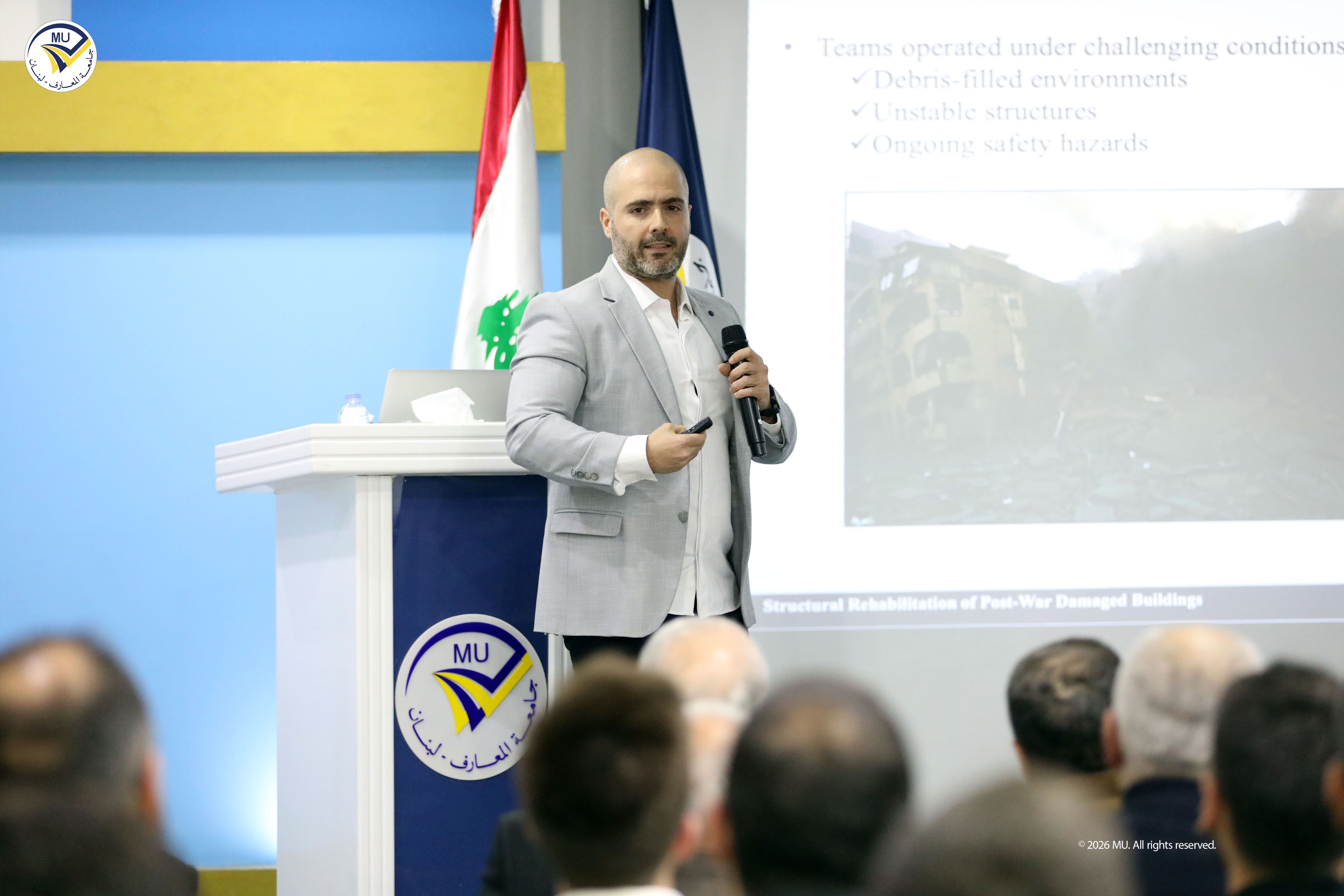
The Faculty of Engineering (FoE) at Al Maaref University (MU), in collaboration with the Islamic Engineers Association, organized a scientific seminar entitled “Structural Rehabilitation of Post-War Damaged Buildings” on Thursday, February 12, 2026, at the university campus in Beirut. The event was attended by engineers, academics, municipal officials, community representatives, and students.
The seminar aimed to present a comprehensive technical framework outlining the engineering and administrative principles for addressing war-damaged buildings. It focused on the standards and procedures required for the assessment, design, implementation, and supervision of structural rehabilitation projects, in line with the latest engineering standards and professional practices.
Faculty members from the Civil Engineering Department—Dr. Qassem Rahhal, Dr. Hussein Mzannar, and Dr. Ali Hatoum—delivered a technical presentation on damage assessment methodologies and engineering decision-making based on scientific analysis. The speakers also outlined the technical and regulatory steps necessary for the effective management of rehabilitation projects and presented practical case examples illustrating applicable engineering solutions.
The seminar addressed key aspects of the rehabilitation process, including:
-
Damage classification and structural safety evaluation
-
Preparation of technical studies and engineering analyses
-
Selection of appropriate strengthening and repair techniques
-
Organization of work and technical supervision in accordance with quality and safety standards
The speakers emphasized the importance of multidisciplinary project management and effective coordination among engineering and consulting teams to ensure clear roles and integrated performance. They noted that successful rehabilitation projects require systematic planning, phased implementation, and continuous technical monitoring.
The seminar also highlighted modern approaches to damage assessment, including the use of digital technologies, modeling and analysis tools, and risk assessment methods to support sound engineering decisions.
In conclusion, the speakers stressed the need for an integrated approach that combines engineering expertise with effective planning and management. Such an approach ensures quality performance, efficient execution, and sustainable results within professional and technical standards.